The 10% Revolution: How Fuelling Can Save India
by Prajakta Ayade
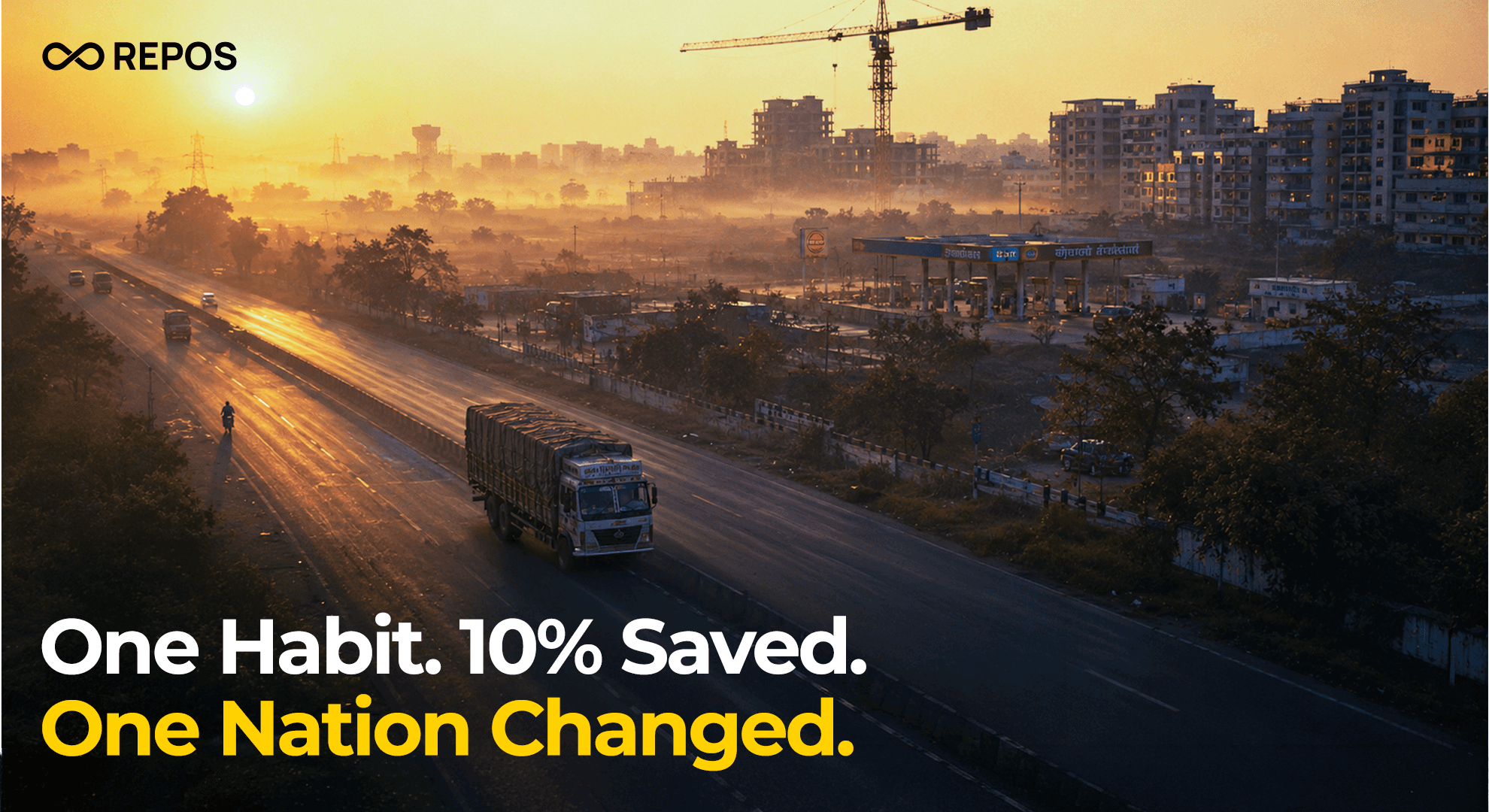
Every single morning, before the chai stalls open and before the office lights flick on, India's engines are already running. Thirty-three crore liters of diesel - every day. That's not just fuel. That's the heartbeat of our nation.
It moves wheat from Punjab to Chennai. It lifts steel beams onto half-built flyovers. It beats inside the generators keeping hospitals alive when the grid goes dark. Diesel doesn't just power machines - it powers livelihoods, ambitions, and a nation's hunger to grow. And for the truck drivers, fleet operators, and construction crews who depend on it, stopping is simply not an option.
Every litre saved reduces the import bill. Every litre saved protects the rupee.
But India is in a crisis.
Fuel prices bite harder every year. The import burden swells. The rupee bends under the weight of an economy that consumes more than it conserves. And yet - the conversation around fuel has almost always been about how much we use. Rarely about how we use it.
That is the insight at the heart of this movement amidts the fuel crisis : Fuelling Ki Zimmedari, Ab Humari. The premise is simple but important- if India's commercial sector, the very engine of its economy, corrects the way it fuels rather than just cutting down on fuelling, we can save 10% of national diesel consumption. Ten percent doesn't sound dramatic until you do the math: that's over 3 crore litres every single day, back in our economy, not in air into the atmosphere.
What does "responsible fuelling" actually mean?
It's not about parking the truck. It's about filling at the right time, the right amount, using the right techniques - avoiding overfilling, managing fuel theft, monitoring consumption patterns, and optimising routes. Small changes in a fleet of 70 vehicles can mean 20 to 25 lakhs in monthly profits. Not savings. Profits.
The voices from the ground
This movement wasn't born in a boardroom. It was validated on the road, in the yards, and inside the offices of the people who live and die by their fuel bills.
"We do the calculations, we do a study internally. And that study shows a significant financial benefit - we are saving 50,000 to 60,000 rupees every month."
- Gateway Distripark, Logistics.
"Most beneficial to us. It's time-saving also and money-saving also.”
- Alsinghani Group, Transport
“Control on fuel is very, very important for the profitability of your business."
- Purple, Transport
"In 70 vehicles, I have a profit of 20 to 25 lakhs per month. 24 hours running — the savings show up because of cost discipline."
- Big Bloc, Construction
These are not environmental activist. These are hard-nosed businesspeople who found , through data, through discipline, through small shifts in daily habit, that responsible fuelling is also the most profitable fuelling.
What makes this campaign different from past fuel conservation is the urgency of it. This is not a government agenda. It's not a guilt trip. It's an invitation - to the 75% of diesel users who keep this country moving - to own the solution. Not because someone told you to. But because this nation is yours too.
The math checks out. The testimonials are real. The national benefit, a lighter import bill, a stronger rupee, a cleaner balance sheet for every fleet operator from Amritsar to Kanyakumari - is not a distant dream. It's 10 percent away.