
Here’s How India Can Save 10% on Fuel - Just By Doing This One Thing Right!
by Prajakta Ayade
There's a conversation happening across India right now. Our Prime Minister has called on every citizen to conserve fuel. It's not a request, it's a cry for help in the middle of a war. A war against import dependency, against rising bills, against the slow bleeding of our foreign reserves.
And like any war, this one needs both soldiers and strategy.
The soldiers? That's us - the everyday Indian who rides a bike, drives a car, makes choices at the petrol pump, who constructs, who uses a DG set, or who owns a fleet.
The strategy? That's what most of us are missing.
Let's start with what we know
India imports 75% of its crude oil. That crude gets refined into petrol and diesel - the lifeblood of our movement, our economy, our daily existence. And the maths is brutal: the more we consume, the more we import. The more we import, the weaker our rupee, the higher our inflation, the deeper the dent in our wallet.
So, the solution sounds simple, right? Use less fuel.
And when it comes to petrol, it actually is that simple.
India consumes about 15 crore litres of petrol every day - and over 90% of that is for personal use. Your car. My bike. Our weekend drives. Our daily commutes. This is fuel we control directly. We can carpool. We can take the metro. We can switch off the engine at signals. We can drive smoother, plan better, waste less.
Petrol savings = behaviour change. And behaviour change is powerful, but it's also limited.
Because petrol is only one part of the story.
Now let's talk about the elephant in the room: Diesel
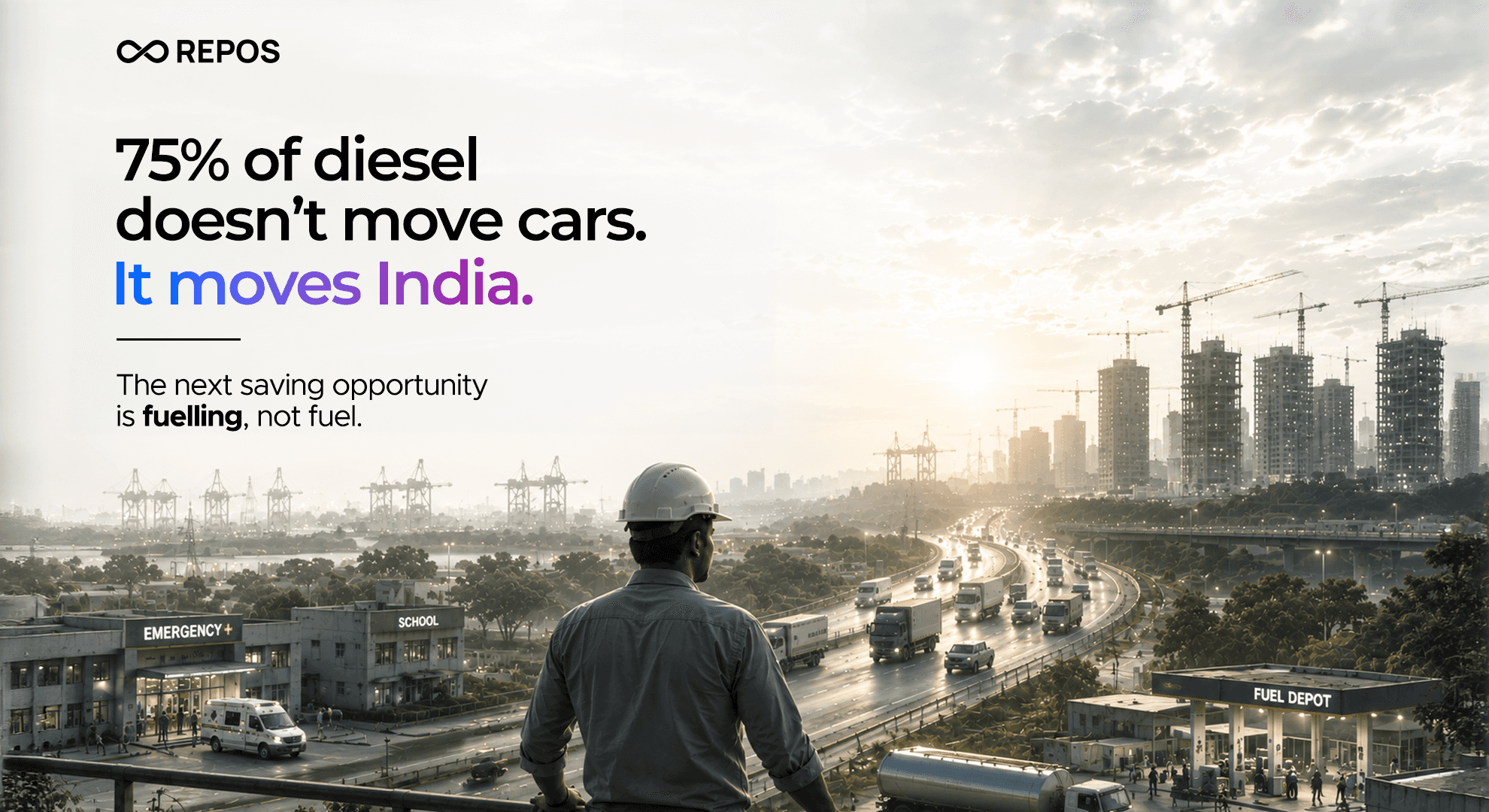
India burns 33 crore litres of diesel every day. That's more than double the petrol consumption. And here's the critical thing- 75% of that diesel is commercial.
It powers:
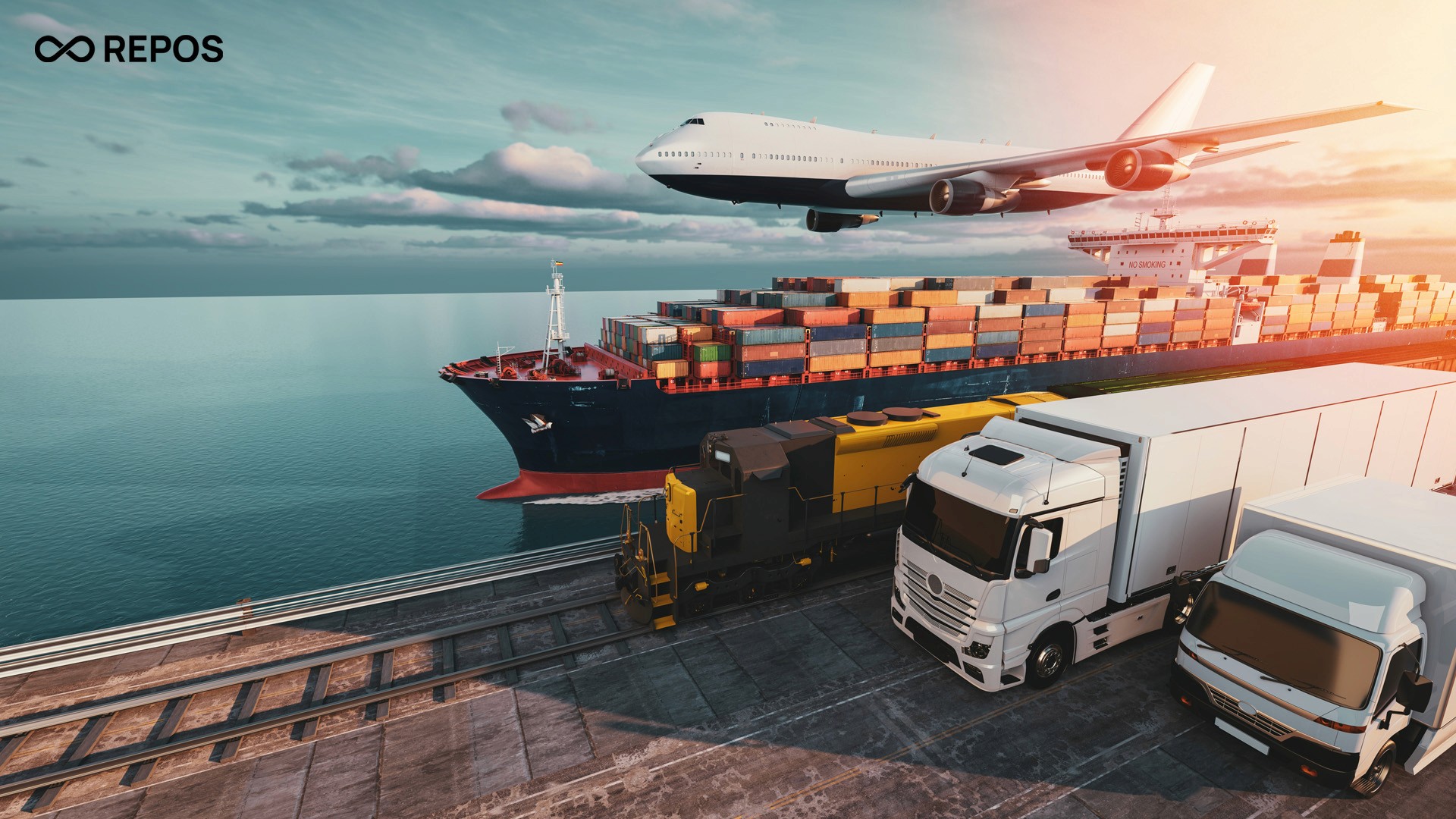
Trucks that carry your milk, your groceries, your Amazon orders
Buses that move millions to work every single day
Construction equipment building roads, metros, bridges, homes
Ports and logistics hubs moving goods from factories to shops
Mining vehicles extracting the raw materials that become everything
DG sets keeping hospitals alive, data centres running, cities lit
Diesel is not a personal fuel. Diesel is the economy's fuel. And here's the uncomfortable truth: you can't fix diesel consumption with awareness campaigns alone. You can't ask a truck driver to "drive less." You can't tell a hospital to "use less backup power." You can't ask construction to slow down unless you're okay with India's development slowing down too.
So what do we do? Give up? Accept that diesel is untouchable? No.
We do something smarter.
We stop focusing on the fuel. And we start focusing on the fuelling.
Here's the distinction that changes everything.
Fuel is a commodity. It's a product. A liquid. A litre. A price. You buy it, you burn it, it's gone.
Fuelling is a process. It's how that fuel gets ordered, delivered, stored, dispensed, tracked, accounted for, optimized, and, most importantly, not wasted.
And in today, fuelling is broken.
Let us paint you a picture of what commercial fuelling looks like on the ground:
Fuel trucks arrive late or early - no one's tracking in real-time
Quantities don't match invoices - spillage, pilferage, "adjustments"
Dispensing happens manually - no sensors, no records, just trust
Inventory and quality? A guy with a stick checking the tank once a day
Payments? Reconciled weeks later, if at all
Usage data? Scattered across notebooks, Excel sheets, WhatsApp groups
This is not a system. This is a leakage.
And when you multiply that leakage across 33 crore litres a day, across thousands of companies, millions of machines, billions of transactions - you get waste at a national scale.
Now, let's do the maths.
If we could save just 10% of commercial diesel - not through stopping operations, but through smarter fuelling, here's what happens:
3.3 crore litres saved every day
₹313 crore saved every day (at ₹90/litre)
₹1.144 lakh crore saved every year
That's roughly 0.3% of India's GDP. That's the size of our defence modernisation budget. That's 31 million tonnes of CO₂ avoided – Every. Single. Year.
10%. That's all it takes. Just 10% efficiency gain through better process, better transparency, better intelligence.
This isn't a theory. Companies across India, from small to giants like L&T, DP World, D-Mart, Shapoorji Pallonji, have implemented intelligent fuelling systems. The data is clear: minimum 10% savings, month after month.
Here's the bigger picture.
When our Prime Minister asks us to save fuel, he's asking us to be responsible. For petrol, that responsibility is personal. Drive less. Drive smarter. Change your habits.
But for diesel, the fuel that keeps India moving - responsibility is systematic.
Fuel is what we buy. Fuelling is what we do with it.
Watch - Fuel Crisis: Why Every Liter Now Counts | The Fuel Reality No One's Talking About
And if we do fuelling responsibly - individually, at every business, at every site, across every sector -we don't just save money.
We can't ask India to stop moving. India is movement.
Every truck on the highway, every crane on a construction site, every generator keeping a hospital alive - that's India's heartbeat.
The question is: are we ready to treat fuelling like the process it is - instead of just the commodity we burn?